


Wildfire Resiliency Project Provides Food and Fun for Animals at Santa Barbara Zoo
The City of Santa Barbara’s Wildfire Resiliency Project has found an unexpected community benefit: feeding animals at the Santa Barbara Zoo.
The project, a collaboration between the Fire and Parks and Recreation Departments, is designed to reduce the risk and severity of wildfires in Santa Barbara’s open space parks by removing high-fire-risk invasive species and restoring native, fire-resilient ecosystems.
In September, the project’s Vegetation Management Crew set sights on Stevens Park, a 26-acre open space park located within the foothill zone of Santa Barbara’s high fire hazard area. Among the invasive plants targeted for removal were silver wattle (Acacia dealbata,) a fast-growing shrub native to Australia, and common olive (Olea Europaea,) native to the Mediterranean, Africa, and China.

Some of those invasive species, it turns out, make great snacks and enrichment for animals at the Santa Barbara Zoo. Rather than chipping the limbs, branches, and leaves into mulch, the City partnered with the Zoo’s Animal Care Team to use the cleared plants for food and enrichment for over 15 different animal species.
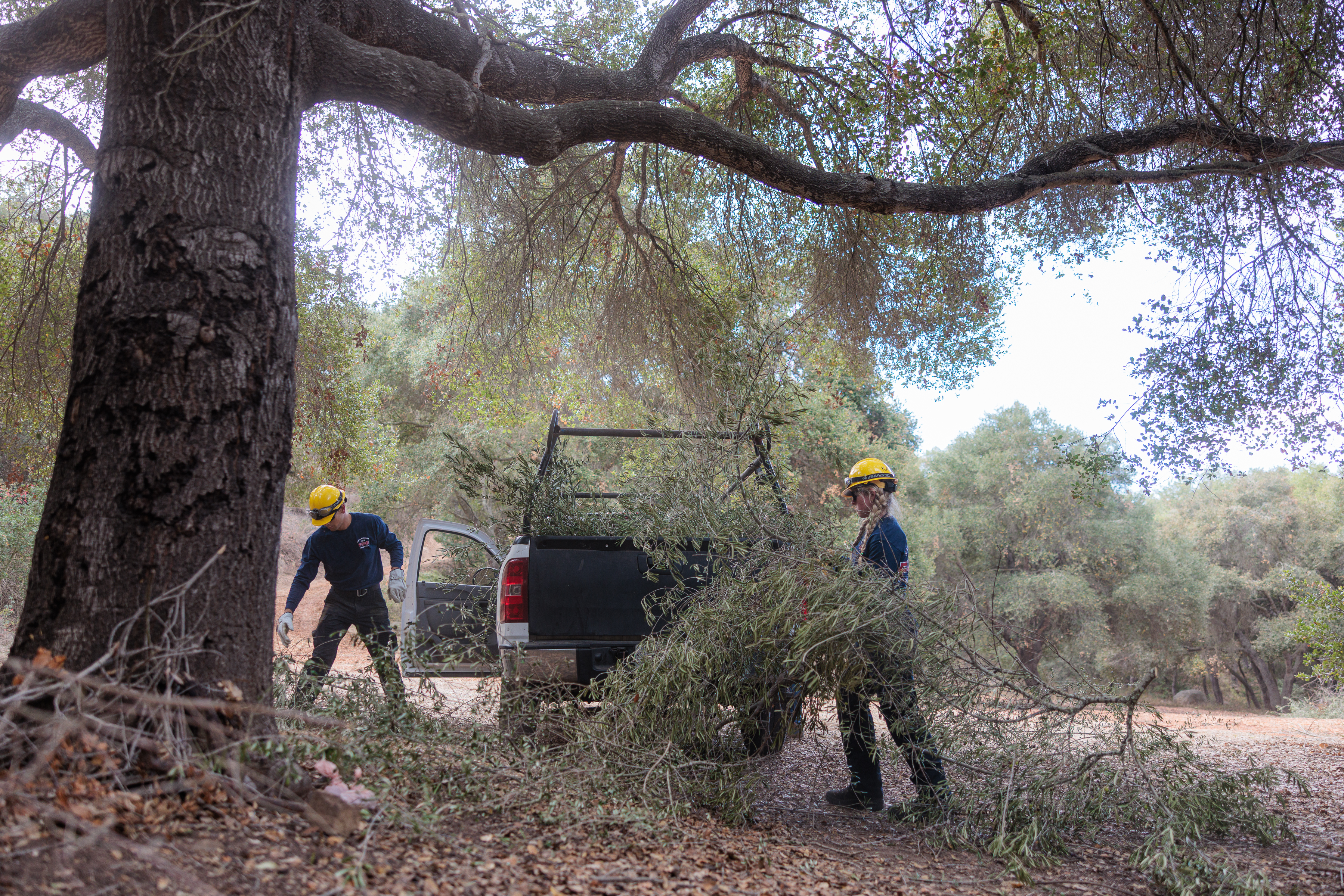
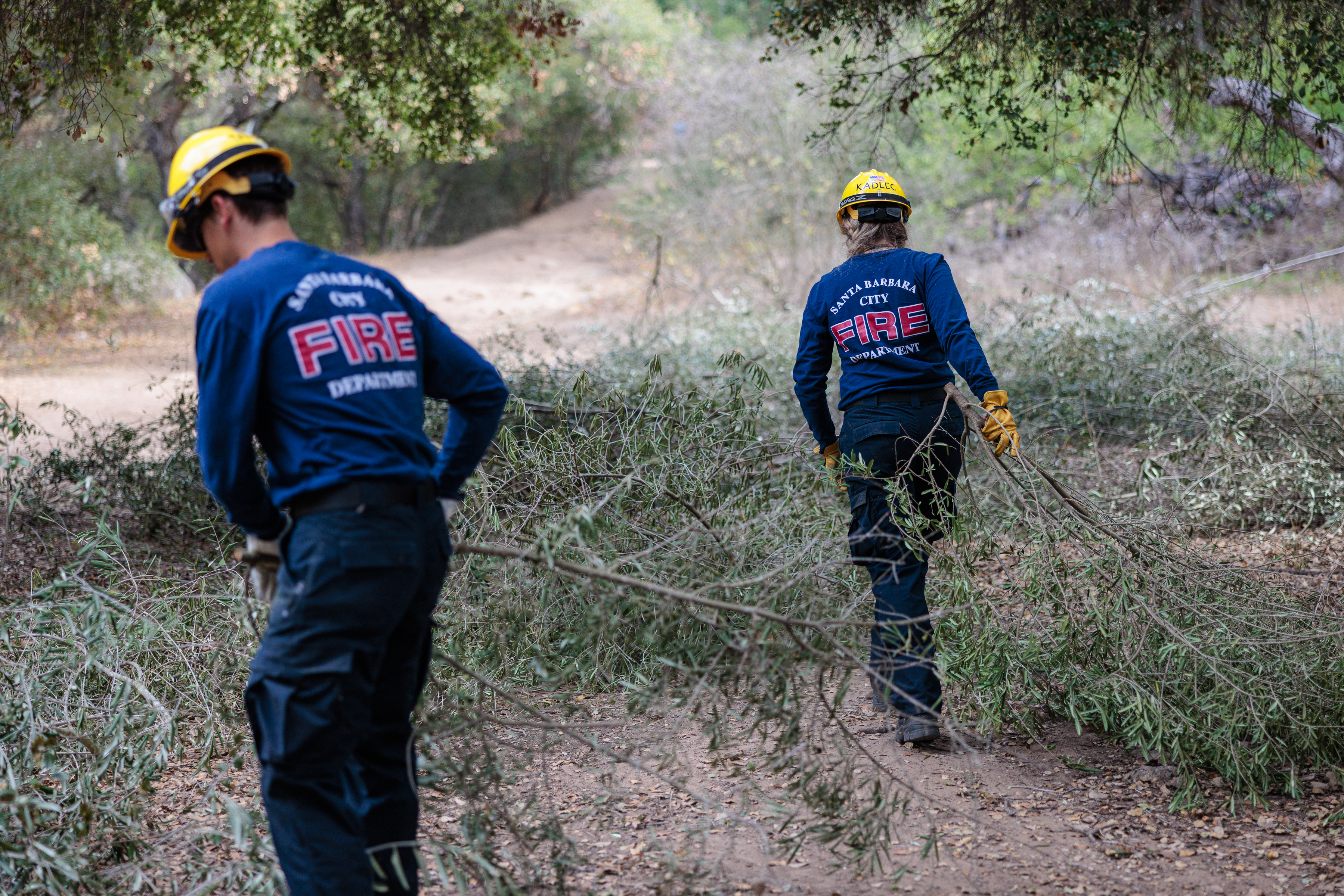
Kangaroos, wallabies, and goats happily munched on olive branches, while Banjo the emu had a blast tossing and pulling at the leaves. Miles the prehensile-tailed porcupine, Tesso the Prevost’s squirrel, Saki monkeys, and Masai giraffes all joined the fun, feasting on both olive and acacia trimmings. Capybaras enjoyed snacking on acacia, while toucans, tawny frogmouths, cockatoos, honeyeaters, and bleeding heart doves used the branches for hiding, climbing, or playing. This clever reuse turned what was once a problem in Stevens Park into enrichment and nutrition at the Zoo.
“Providing natural foods like browse is key for herbivores’ gut biome and can improve overall well-being for the animals,” said the Zoo’s Animal Nutritionist, Trent Barnhart. Zoo staff estimate that the donated branches and leaves saved the organization around $6,400.
“I can think of no better way to use these invasive cuttings than to feed animals who would graze on them in their native habitat,” said Monique O’Conner, Open Space Planner for the City of Santa Barbara Parks and Recreation Department. “Transporting the plant material offsite helps us reduce the invasive seedbank in the park and frees up space for our fire-resilient natives to thrive. It’s really a win-win.”
As a thank you, the Santa Barbara Zoo team invited Parks and Recreation and Fire Department staff for a visit to see the animals and the chance to feed olive branches collected from the park to Adia, Theo, and Malia, the Zoo’s Masai giraffes.
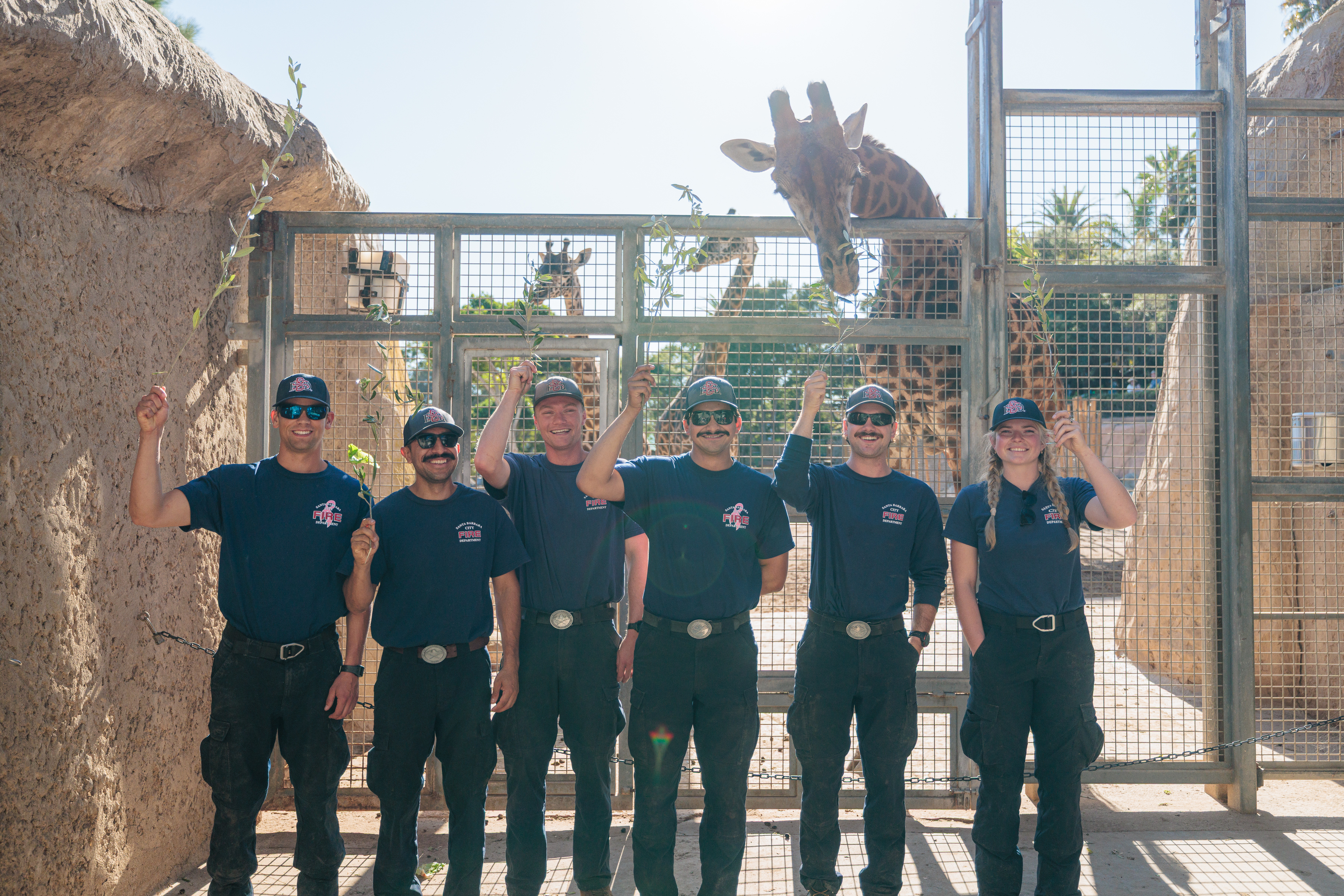
This is not the first time the Wildfire Resiliency Project has incorporated animals. During the spring, sheep can be found across different parks to help maintain defensible space, the buffer zone between buildings and surrounding vegetation that can help slow or stop the spread of wildfire.
“Grazing is one of many tools in our toolbox for vegetation management, but this might be the first time an agency has gotten giraffes and monkeys involved,” said Mark vonTillow, Wildland Fire Specialist with the City of Santa Barbara Fire Department. “Anytime we can remove hazardous fuels and keep that material out of the waste stream is a win. Plus, working with the Zoo has been a great opportunity for the crew to see their work make a direct, positive impact beyond wildfire prevention.”
Learn more about the Wildfire Resiliency Project and the work underway in Stevens Park at SantaBarbaraCA.gov/WildfireResiliency.
To learn more about donating your own plant material to the Santa Barbara Zoo, visit SBZoo.com/Donate#Browse.